
Selection of a suitable explant material for callus induction and in vitro morphogenesis in chir pine (Pinus roxburghii)
Keywords:
Adventitious buds, bud-forming capacity, callus induction, chir pine, DCR mediumAbstract
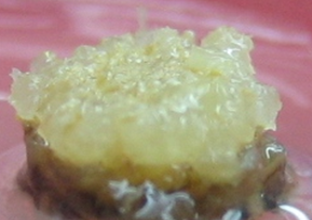
The present study aimed at standardizing in vitro conditions for callus induction, maintenance and plant regeneration in Pinus roxburghii Sargent. Various factors, including the type of explant, callus induction medium, and explant collection time, were investigated in callus induction. Shoot apical domes were responsive for callus induction with the highest induction frequencies (82.5%) than secondary needles (75.80%) or other tissues on DCR medium supplemented with 22.62 µM 2, 4-Dichlorophenoxyacetic acid (2, 4-D), 26.85 µM α-Naphthalene acetic acid (NAA), and 2 µM Thidiazuron (TDZ) after 18 days. The maximum rate of callus induction was observed in January (for apical domes) and March (for secondary needles), indicating that these collection times are suitable for callus induction from vegetative tissues. Off-white and friable calluses with excellent proliferation were achieved with TDZ better than 6-Benzylaminopurine (BAP) for callus induction and maintenance.
Downloads
References
Ahmed, M., Hussain, T., Sheikh, A.H., Hussain, S.S. and Siddiqui, M.F. (2006). Phytosociology and structure of Himalayan forests from different climatic zones of Pakistan. Pakistan journal of botany, 38(2), 361-383.
Akram, M., & Aftab, F. (2008). High frequency multiple shoot formation from nodal explants of teak (Tectona grandis L.) induced by thidiazuron. Propagation of ornamental plants, 8(2), 72-75.
Ansari, L., Ahmad, W., Saleem, A., Imran, M., Malik, K., Hussain, I., ... & Munir, M. (2022). Forest Cover Change and Climate Variation in Subtropical Chir Pine Forests of Murree through GIS. Forests, 13(10), 1576.
Boyer, J. N., & South, D. B. (1989). Seasonal changes in intensity of bud dormancy in loblolly pine seedlings. Tree physiology, 5(3), 379-385.
Gupta, P.K. and Durzan, D.J. (1985) Shoot multiplication from mature trees of Douglas-fir (Pseudotsuga menziesii) and sugar pine (Pinus lambertiana). Plant cell reports, 4:177-179.
Hohtola, A. (1988). Seasonal changes in explant viability and contamination of tissue cultures from mature Scots pine. Plant Cell Tissue & Organ Culture, 15, 211–222.
Huetteman, C. A., & Preece, J. E. (1993). Thidiazuron: a potent cytokinin for woody plant tissue culture. Plant cell, tissue and organ culture, 33(2), 105-119.
Malabadi, R. B.; van Staden, J. (2003). Somatic embryos can be induced from the vegetative shoot apex of mature Pinus patula trees. South african journal of botany, 69, 450–451.
Malabadi, R.B., Choudhury, H., Tandon, P. (2004). Initiation, maintenance and maturation of somatic embryos from thin apical dome sections in Pinus kesiya (Royle ex. Gord) promoted by partial desiccation and Gellan gum. Scientia horticulturae, 102, 449-459.
Malabadi, R.B., Nataraja, K. (2006). Cryopreservation and plant regeneration via somatic embryogenesis using shoot apical domes of mature Pinus roxburghii Sarg. trees. In Vitro Cellular and Developmental Biology – Plant, 42, 152-159.
Sharma, S. K., & Verma, S. K. (2011). Seasonal influences on the rooting response of Chir pine (Pinus roxburghii Sarg.). Annals of Forest research, 54(2), 241-247.
Siddiqui, M.M., Ahmed, W., Khan, M., Khan, N., Nazim, U., Syed, K.H. (2009). Phytosociology of Pinus roxburghii Sargent. (Chir pine) in Lesser Himalayan and Hindu Kush range of Pakistan. Pakistan journal of botany, 41, 2357-2369.
Sinha, B. (2002). Pines in the Himalayas: Past, present and future scenario. Energy & environment, 13(6), 873-881.
Downloads
Published
Issue
Section
License
Copyright (c) 2025 Sadia Kaleem, Aroosha Ashraf, Faheem Aftab (Author)

This work is licensed under a Creative Commons Attribution 4.0 International License.